Herbal Wisdom · 3 min read
The Elder's Last Gift — Gathering Berries Before the Frost
By Agnes Whitmore
By Agnes Whitmore
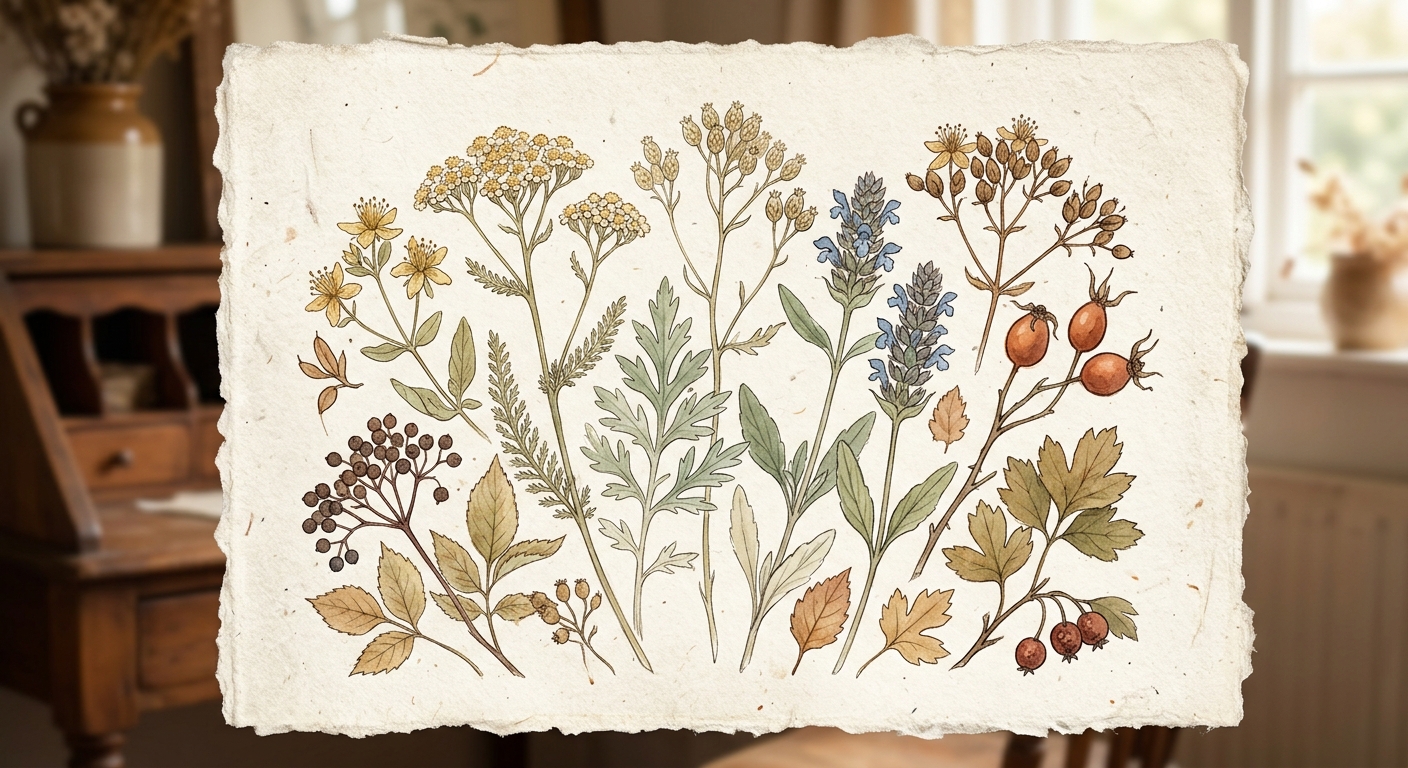
There is a particular kind of October morning I have always loved — the air carrying that first real bite of cold, the light arriving late and amber-coloured, and the elder trees standing heavy with their dark, pendulous clusters of berries. By now, most of the hedgerow has quietened. The rosehips are wrinkling on their stems. The blackberries have gone over. But elder, dear Sambucus nigra, lingers still, and I consider it one of autumn's most generous farewell gifts.
My grandmother called the elder the medicine chest of the country people, and she was not wrong. Those small, near-black berries — never eaten raw, mind you, as they will unsettle the stomach — are extraordinarily rich in compounds that seem to encourage the body's own defences. For generations before anyone thought to put such things in a bottle and sell them in a chemist's shop, country families made their elderberry cordials and rob in October precisely because November and its coughs and draughts were just around the corner.
To gather well, you want clusters that have turned fully dark and hang with a little weight, drooping slightly from their rosy stems. Taste one cautiously — it should be deep, almost winey, without the harsh greenness of an underripe berry. I use kitchen scissors and a wide basket, and I strip the clusters gently with a fork back at the kitchen table, which saves no end of staining of the fingers. Though, I confess, some staining is inevitable and ought to be worn as a badge of honest seasonal work.
My own elderberry rob is the simplest thing imaginable. I simmer the stripped berries slowly with just enough water to cover, then strain them through muslin without pressing too hard, so the liquid stays clear and jewel-dark. To each pint of juice I add a pound of honey — local, raw if you can manage it — along with a stick of cinnamon, a few cloves, and a thumb of grated ginger. This simmers again for twenty minutes until it thickens slightly, then goes into sterilised bottles and into the larder. A spoonful stirred into hot water at the first sign of a cold, or simply taken straight from the spoon last thing at night — it is a comfort as much as a remedy.
I always leave a good portion of berries on the tree for the birds, who need them rather more urgently than I do as winter approaches. There is a rightness to this, I think. We take what we need, leave what we can, and trust that the elder will return next summer as generous as ever. It has been growing at the corner of the lane here for longer than anyone can remember, and I fully expect it will be growing there long after all of us are gone — which is, in its quiet way, rather a comforting thought.
With warmth, Agnes
Back to the JournalOnce a fortnight I write a quiet letter — a seasonal recipe, a herbal remedy, a small thought for a slower life. No noise, no selling. Only warmth.