Herbal Wisdom · 3 min read
Meadowsweet in the Midsummer Light
By Agnes Whitmore
By Agnes Whitmore
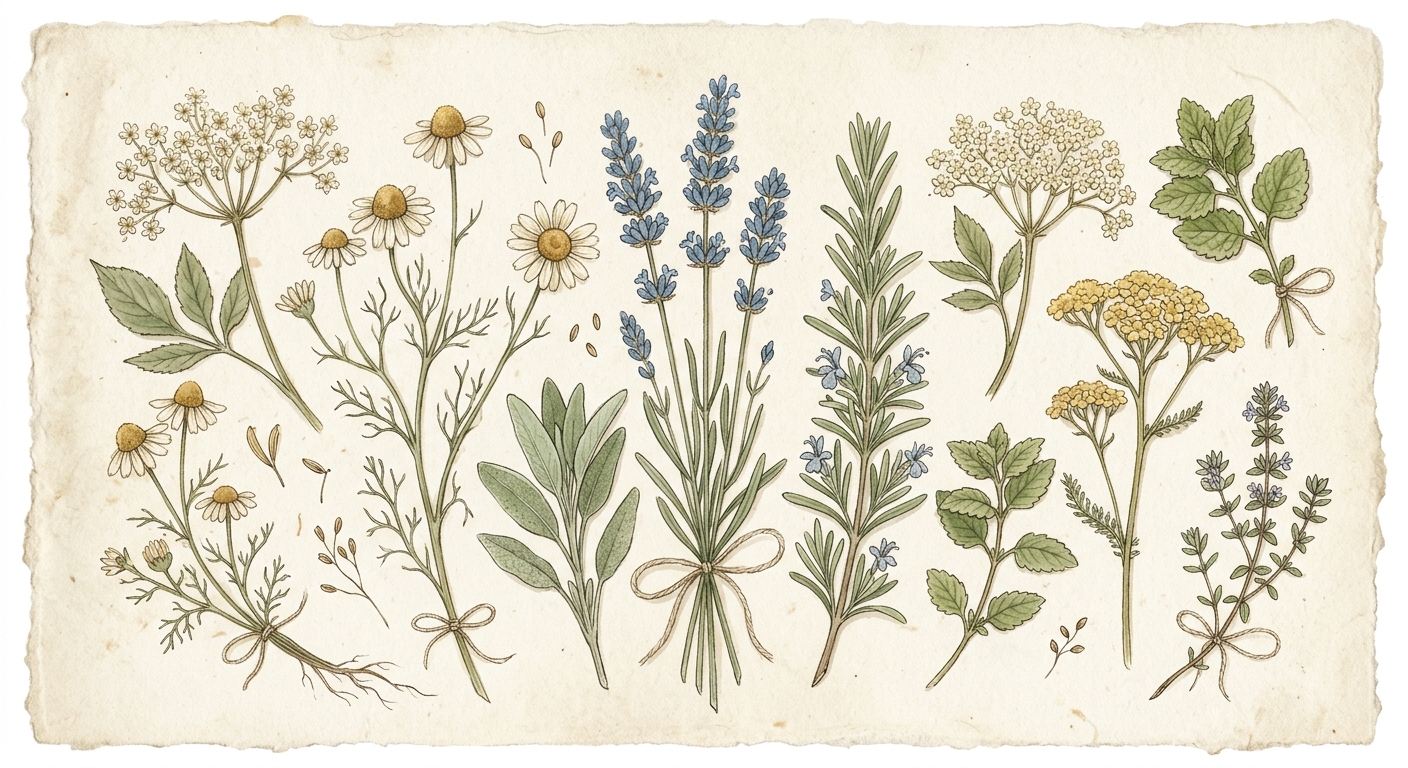
If you have walked beside a damp hedgerow or followed a stream path this August, you will know meadowsweet before you even see her. The scent arrives first — sweet and almondish, with something almost bridal about it — and then there she is, tall and creamy-white against the green, her flowers foaming upward like a glass of something celebratory. I have loved her since I was a girl, and I love her still. She is one of those plants that asks nothing of you but a little attention.
Meadowsweet — Filipendula ulmaria, if we are being formal, though I rarely am — was once strewn across the stone floors of great halls to sweeten the air and discourage fleas. Queen Elizabeth I is said to have favoured it above all other strewing herbs, which pleases me enormously. But long before royalty took notice, country healers knew her well. She carries natural salicylates — the very compounds from which aspirin was later derived — and has been used for generations to ease headaches, calm a sour stomach, and bring gentle comfort to those with feverish chills.
To gather her, go out on a dry morning when the dew has lifted and the flowers are freshly open. Choose stems where the blossoms are just coming into their fullness — not yet gone to seed, not still tightly budded. Snip cleanly and carry them loosely in a basket, never bundled tight, so they can breathe. Gather only what you need, leave plenty for the bees, and always say a quiet thank-you. That last part is not superstition. It is simply good manners.
At home, I make meadowsweet tea most often. A small handful of fresh flowers steeped in just-boiled water for five minutes or so — no longer, or it turns a little bitter — strained and sweetened with a touch of honey if you like. Drunk slowly, it is wonderfully soothing for an unsettled stomach after a heavy summer meal, and I have found it a gentle friend on days when a low headache settles behind the eyes. It will not knock anything out of you the way a chemist's tablet might, but it will soften things, which is often all one truly needs.
The flowers can also be tucked into a muslin bag and floated in a cool bath — heavenly on a hot August evening. Or try a simple meadowsweet cordial: simmer the flowers with water, sugar, and a squeeze of lemon, then strain and bottle. It keeps in the refrigerator for a week or so and tastes of summer in the most honest, unadorned way. Poured over ice with cold water, it is the sort of drink that makes you feel the afternoon has been well spent.
There is something I find deeply consoling about herbs like meadowsweet — plants that have been tended, gathered, and whispered about by women across centuries, passed hand to hand through kitchens and still-rooms long before any of it was written down. We are not inventing anything when we use them. We are simply remembering. And August, with her long golden light and her generous hedgerows, is exactly the right time for remembering.
With warmth, Agnes
Back to the JournalOnce a fortnight I write a quiet letter — a seasonal recipe, a herbal remedy, a small thought for a slower life. No noise, no selling. Only warmth.